Billable Units
Langfuse Cloud pricing is based on the number of ingested units per billing period. Units are either traces, observations or scores.
Units = Count of Traces + Count of Observations + Count of Scores
Use our pricing calculator to estimate your monthly costs based on your expected usage.
Self-hosted (OSS)
Self-hosted Langfuse (OSS) is free under the MIT license, so there is no usage-based bill. The unit definition above is still useful when you want to quantify your data volume, for example to estimate the cost of moving to Langfuse Cloud or to size a self-hosted deployment.
You can read your unit counts directly from the built-in Langfuse Usage Management dashboard, one of Langfuse's curated dashboards (see Custom Dashboards).
Open the dashboard
In your Langfuse project, go to Dashboards and open Langfuse Usage Management.
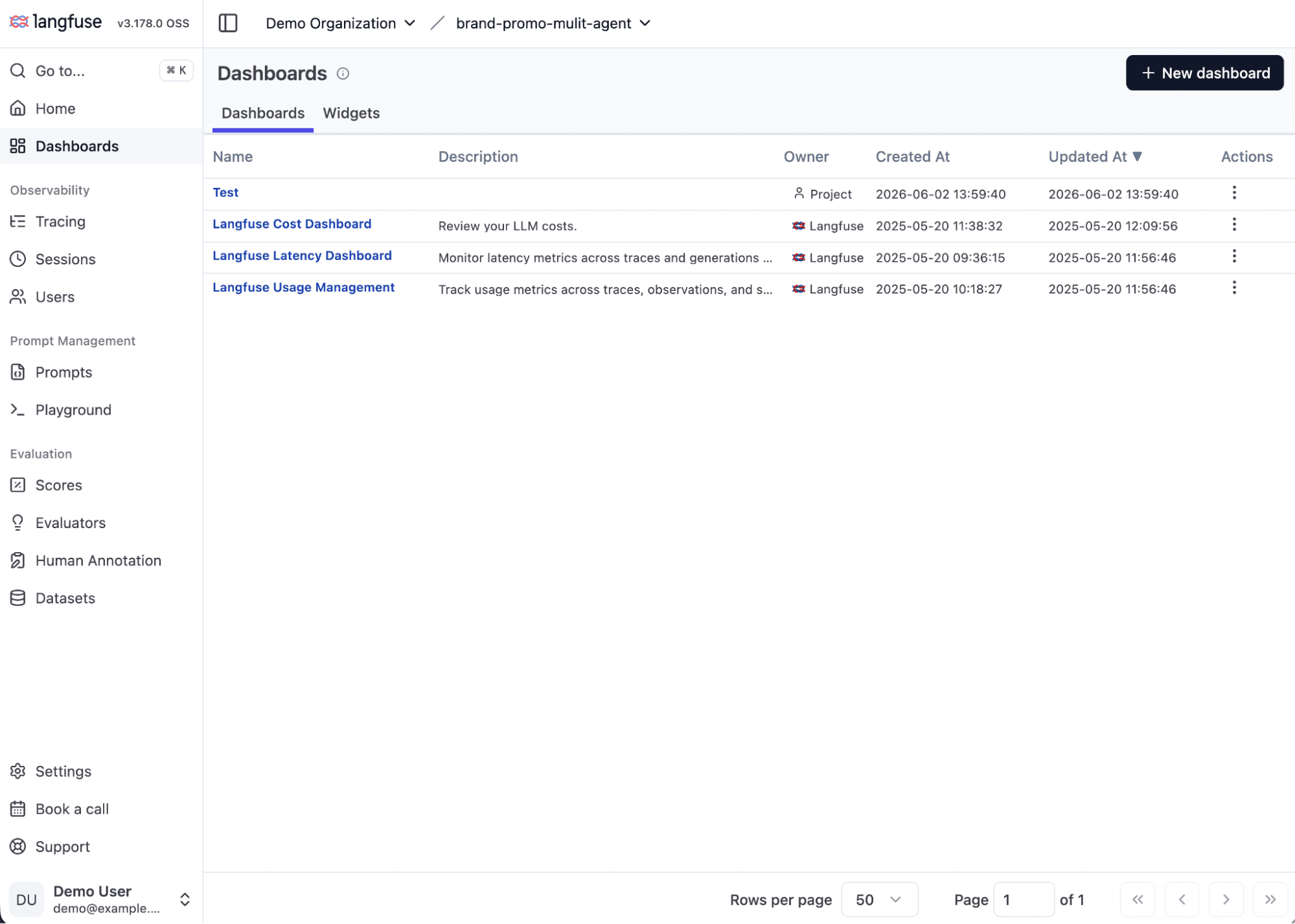
Select the last 30 days
Set the date range to the last 30 days to capture a month of usage.
Sum the counts
Add the count widgets together to get your monthly units:
- Total Trace Count
- Total Observation Count
- Total Score Count (add the numeric and categorical widgets)
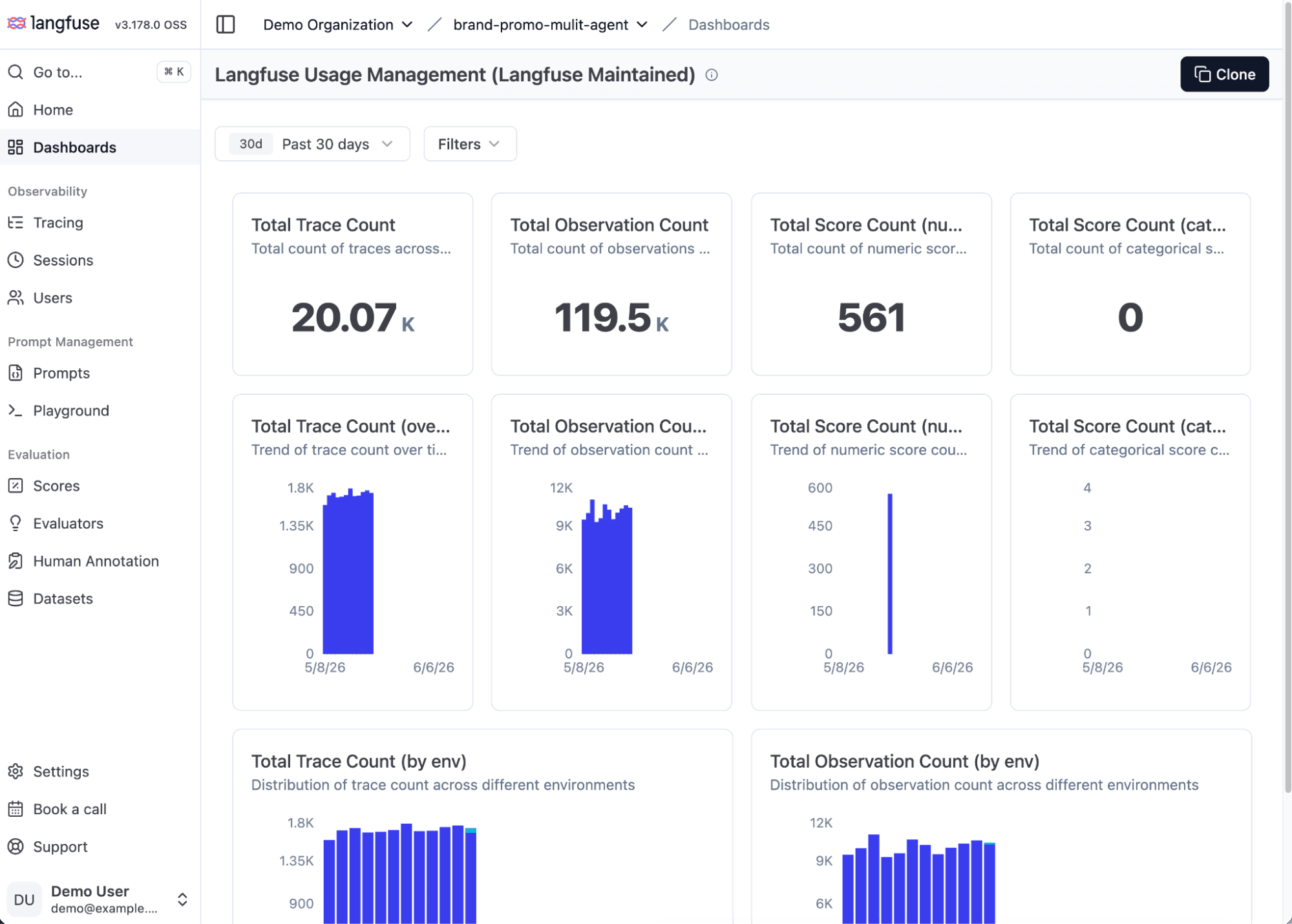
For the example above:
Units = 20,070 Traces + 119,500 Observations + 561 Scores = 140,131 units / month (≈ 1,681,572 units / year)
FAQ
How can I track my Langfuse Cloud usage? Use the Usage Monitoring Report in the Dashboards tab in Langfuse to analyze your Langfuse Cloud usage.
Do units created by Langfuse features count toward billing? Yes. Any trace, observation, or score stored in Langfuse counts as a billable unit, whether it is sent by your application or created by Langfuse features such as LLM-as-a-Judge, Annotation Queues, or experiments.
How can I optimize my Langfuse Cloud usage to reduce cost? If your application scales and you want to optimize Langfuse Cloud cost, please check out this guide.
Last edited


